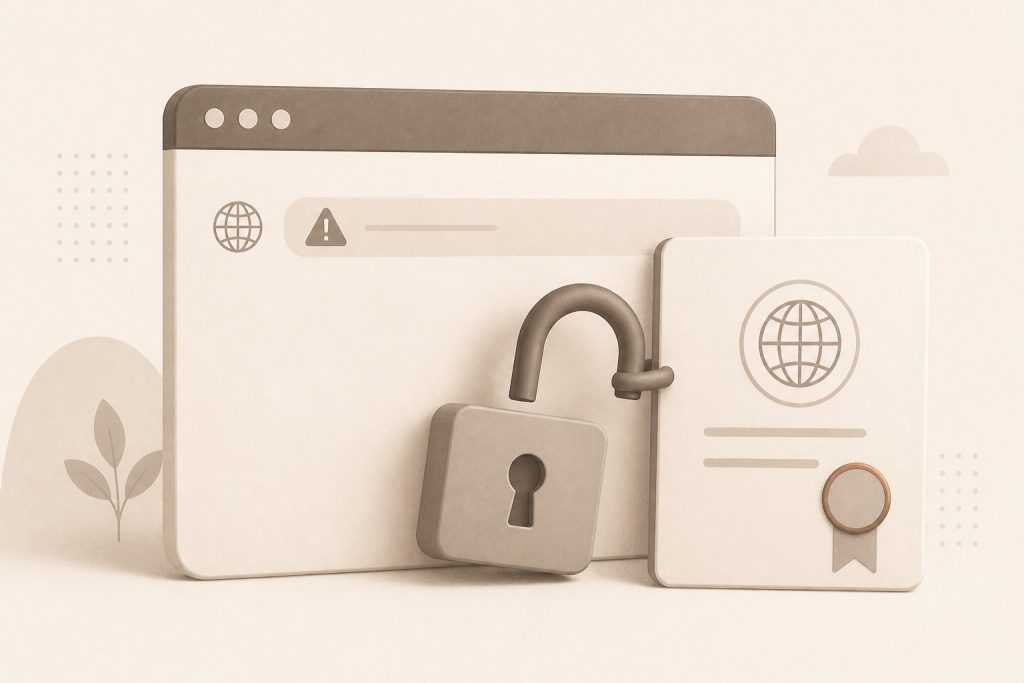
The browser shows “Not Secure,” a certificate warning, mixed-content notice, or refuses the HTTPS connection.
You do not have to become a server administrator because one part of your website stopped cooperating. Start with the checks that stay inside WordPress. If the problem moves into hosting or server configuration, I will show you where the risk begins—and where it may make more sense to hand the headache to me.
Start with the checks inside WordPress
- Open the certificate details and note the hostname and expiration date.
- Confirm that the domain points to the expected hosting account.
- Check whether the warning affects the entire site or only images, scripts, or forms.
After each change, test the same action again. Change one thing at a time so you know what helped and what did not.
A good place to pause
When this leaves normal WordPress editing
Certificate, DNS, proxy, and mixed-content problems live across several systems. If the hostname or certificate is wrong, this is not a WordPress page-editor repair.
If you inherited the website, took over after parting ways with a developer, or normally use WordPress only to add photographs and text, you may have never opened cPanel before. That is normal, but if you are new to backend server configuration, you need to proceed with caution. This is where you can break your site.
You also do not need to end up with more damage than you bargained for just to solve one aggravating problem. The standard repair is $149.00 if you would rather hand it off.
If you are comfortable with backend server configurations, continue with the technical steps below.
Technical checks
- Verify that the certificate covers the exact hostname visitors use and includes the full certificate chain.
- Confirm DNS points to the intended server or proxy.
- Review proxy SSL mode and the origin certificate together.
- Find and replace old HTTP asset URLs only after the certificate and HTTPS route are correct.
Proceed with caution
Do not bypass certificate warnings on login, account, or payment pages. Fix the hostname and connection before entering credentials.
Test the repair without making a second problem
- Keep a note of the original setting or filename before you change it.
- Make one change, clear only the relevant cache, and repeat the exact test.
- Check both the public page and the WordPress dashboard.
- If the error changes, stop and record the new message before continuing.
You can hand this off
If these checks have taken you beyond the part of WordPress you normally use, you can stop. I can trace the cause, make the repair, test the site, and tell you what was changed without turning one problem into your new full-time job.